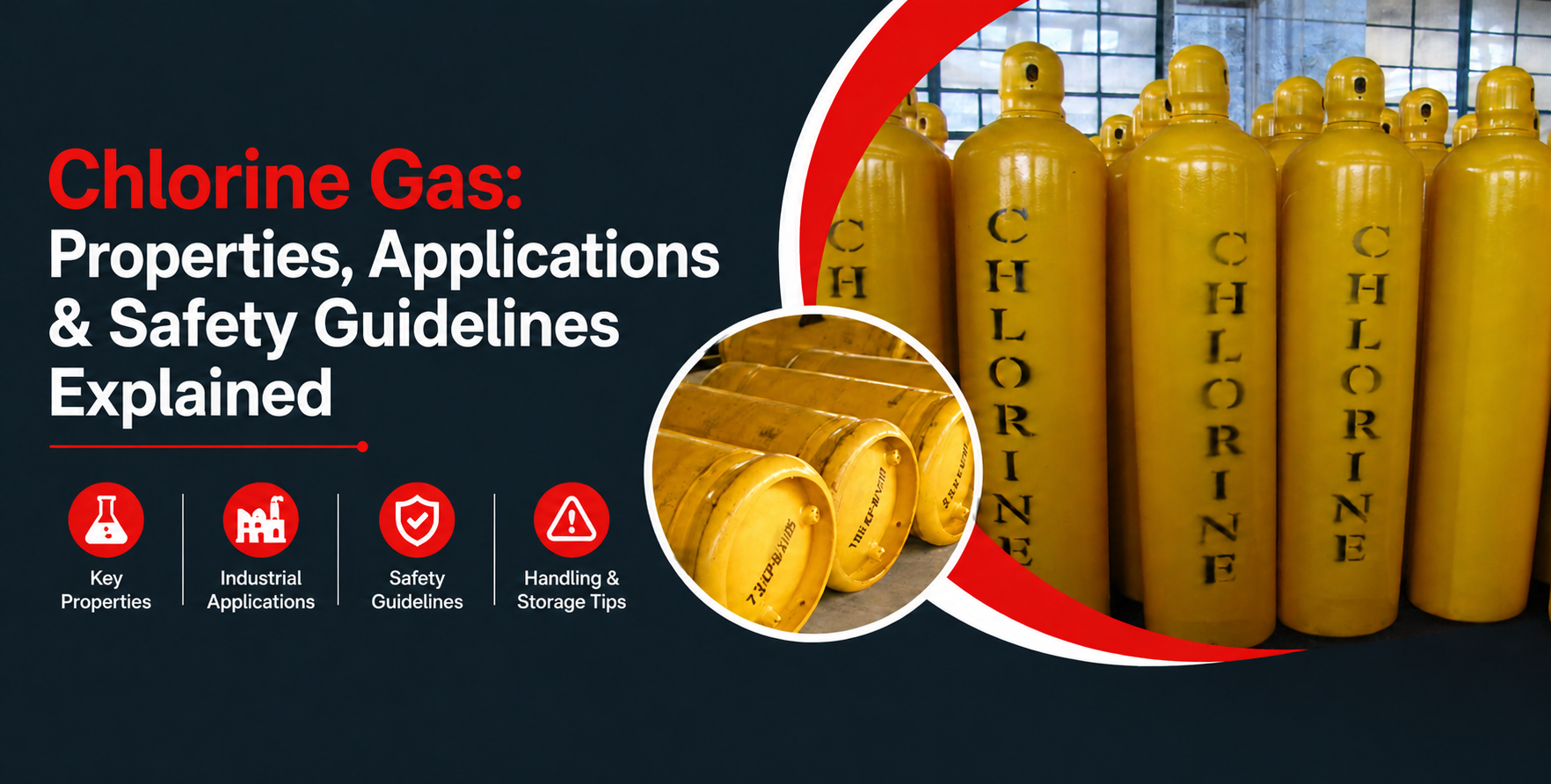
This report focuses on Chlorine Gas; an industrial chemical with a yellowish-green appearance and sharp odor. Chlorine Gas is amongst the most commonly manufactured chemicals in the world owing to its diverse uses that it has been established over the years and that too in a range of industries. This industrial chemical is commonly extracted from Industrial Salt via electrolysis. Its oxidizing and disinfectant properties have made it an indispensable product in water purification and sanitation processes. When cooled under pressure, this chemical changes to Liquid Chlorine which can now be transported conveniently for commercial use. As a result, there is steady demand for this product.
There are several unique physical and chemical features exhibited by Chlorine Gas. First, Chlorine is denser than air meaning that it tends to settle at low-level places. Furthermore, when in a liquid state, Chlorine Gas is amber-colored and rapidly turns into vapor under room temperatures. It is chemically reactive and interacts with organic materials and metals hence leading to the formation of derivatives. One example is Aluminum Chloride Anhydrous, a product which acts as a catalyst in several chemical reactions.
Liquid Chlorine Gas is used in a range of industries and hence these are meant for a heavy duty use. This process ensures the separation of chlorine which is then subjected to compression before cooling into Liquid Chlorine. Such chemicals require specific storage facilities which are capable of retaining their content due to the corrosive nature of this chemical. Pressure monitoring systems are usually installed in the facilities handling Liquid Chlorine Gas to ensure leakages are detected early enough.
Chlorine Gas forms the basis for many industrial processes. It is widely used in purifiers to disinfect the water by getting rid of the bacteria present in it. In the field of chemicals, it plays a key role in the production of plastics and chemicals such as Anhydrous Aluminum Chloride. The Chlorine Gas is widely used in the textile industry in the process of bleaching. Likewise, Chlorine Gas is used in the pharmaceutical industry for the production of drugs.
|
Safety Measure |
Description |
|
Protective Equipment |
Workers must wear masks, gloves, and chemical-resistant suits |
|
Leak Detection Systems |
Continuous monitoring ensures early identification of gas leaks |
|
Proper Ventilation |
Facilities must have strong ventilation to disperse Chlorine Gas |
|
Storage Protocols |
Liquid Chlorine should be stored in corrosion-resistant containers |
|
Emergency Training |
Staff must be trained to handle exposure and evacuation procedures |
Chlorine Gas is an important industrial compound, which has been created using Industrial Salt. Its conversion to Liquid Chlorine helps in easy transport and storage. Some of its major uses include water purification and manufacture of Aluminium Chloride Anhydrous. But because of the dangers it poses, it needs to be handled carefully to avoid any incidents.
Difference Between Chlorine Gas and Liquid Chlorine
Chlorine Gas is the gaseous state of the element, while Liquid Chlorine is achieved when the gas is compressed and cooled to facilitate its storage and transportation.
What is the use of Liquid Chlorine in the treatment of water?
This chemical is used in water treatment to kill germs like bacteria, viruses, and other microorganisms present in the water.
In what industries is Chlorine Gas used frequently?
Some of the common industries where this compound is required include water purification, medicine production, textile industry, and chemicals manufacturing.
Is Chlorine Gas a hazardous substance?
Yes, it is hazardous because exposure to this compound can be harmful, and therefore safety precautions need to be taken.
Aluminium Chloride Anhydrous - What is its main purpose?
The most important role that this compound plays is to act as a catalyst in some chemical reaction.
Our dedicated team is always ready to assist you in finding the right solutions for your business.