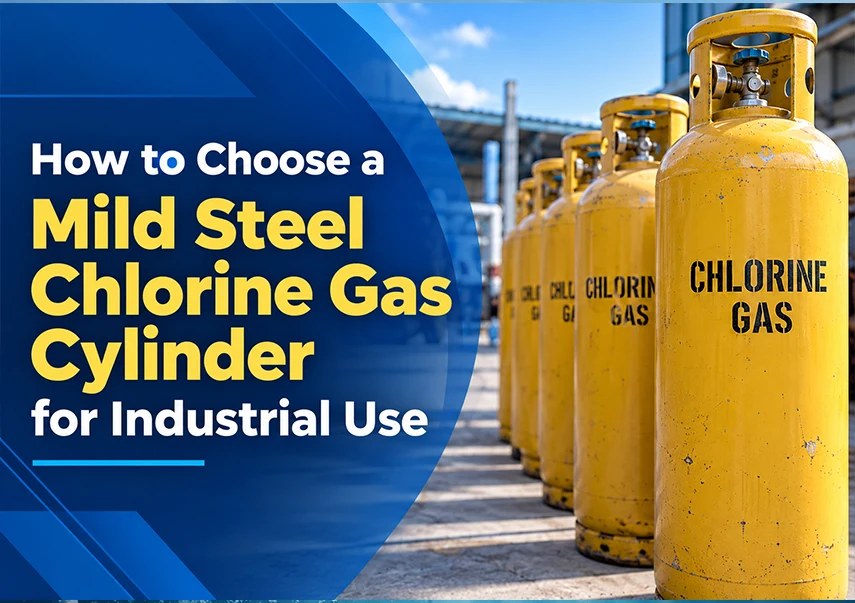
Chlorine gas is commonly used in various industrial procedures. In this regard, the cylinder to be chosen should be based on the requirement in the particular industrial setting. This is because Chlorine gas is highly reactive and requires a careful approach in handling and transportation.
The Mild Steel Chlorine Gas Cylinder is specifically designed to meet applications where there is a need to store and provide controlled chlorine gas. Products and materials for different industrial requirements are supplied by Chemtrade International Corporation, including Chlorine Gas, Liquid Chlorine and other chemicals.
In choosing the most appropriate cylinder, the following issues have to be taken into consideration such as its capacity, construction type, handling requirements and compatibility with the intended application of chlorine.
The first issue concerns whether the facility would need to handle chlorine in its gaseous or liquid state. It should be noted that chlorine is stored in liquid form under pressure and changes to a gaseous state under the suitable conditions.
The Liquid Chlorine Gas is normally handled in special containers due to the nature of the substance and involved pressure. Withdrawing of the chlorine from the suitable container it is supplied in gas form and used in the processes which involve the Chlorine Gas.
This shows the significance of choosing the proper cylinder as part of the gas handling system. The cylinder should fit the procedure that is intended to be used for storage and utilization of the gas.
It should be emphasized that the industrial facilities should not take into account the physical size of the cylinder alone while choosing the most appropriate cylinder. The capacity should be chosen with regards to the volume of chlorine utilized in the facility and the frequency of changing or refilling the cylinders.
In this way, smaller facilities will have other considerations compared to a large water treatment facility or the chemical manufacturing plant. This could facilitate the material handling and reduce the unnecessary cylinder changes.
In conclusion, it is necessary to know your normal consumption of the chlorine, storage and supply arrangements before ordering.
It is imperative that the Mild Steel Chlorine Gas Cylinder should be produced with special regard to the conditions of use involved with chlorine storage and handling. There are some aspects that must be taken into account.
For industrial consumers, these factors may include:
Quality and material of the cylinder body
Appropriate volume of the cylinder
Valve configuration
Surface condition
Identification and labeling
Tests and inspections
Safe handling and storage conditions
These tests will help companies choose cylinders suitable for the specific environmental conditions of their operation and not just buy the cheapest cylinders available on the market.
The Liquid Chlorine must be handled and stored with care owing to its chemical nature. An establishment that deals with this chemical substance must have appropriate storage facilities, personnel, and a handling protocol based on the use of the liquid chlorine.
During the process of dispensing Liquid Chlorine out of the storage facility, the dispensing facility must be appropriate to the application intended. The equipment that will be used must also be compatible with chlorine applications.
This is why the cylinder should be seen as part of the whole system rather than being a product by itself.
The cylinder itself, in fact, constitutes only one element of the industrial chlorine supply chain. For certain applications, there will be a need for more equipment to be installed between the cylinder and the place of usage of Chlorine Gas.
These connecting mechanisms, valves, regulators, pipelines, etc., should be appropriate for chlorine operations. Otherwise, using improper equipment will lead to operational issues and handling risks.
Thus, industrial customers should verify what kind of connection specifications are necessary prior to purchasing. This issue becomes even more urgent for replacement of an old cylinder.
Chlorine is applied in various industrial uses. One of the common uses of Chlorine Gas is in water treatment, where it is utilized as a disinfectant. Other uses include being applied in various chemical processing industries.
There may be significant differences in the requirements of the various industries. In water treatment, the major requirement may be proper dosage of chlorine, whereas in a chemical plant, there might be other requirements.
Chemtrade International Corporation deals in the needs of chemical industries; therefore, buyers should be keen to specify their application of chlorine before buying any products or cylinders.
Industrial Salt is another significant industrial raw material that must not be mistaken for chlorine cylinders or Liquid Chlorine. Industrial Salt is used as a raw material in many manufacturing and chemical reactions.
However, in some manufacturing processes, salt can be used as an initial reactant to manufacture chlorine gas and other chemicals. Yet, Industrial Salt is not an alternative to Mild Steel Chlorine Gas Cylinder and pre-manufactured Chlorine Gas.
This knowledge will help you choose the right product during the ordering process.
|
Factor |
What to Check |
|
Cylinder material |
Confirm that the construction is suitable for chlorine service |
|
Capacity |
Match the cylinder with expected consumption |
|
Chlorine form |
Determine whether the application uses Liquid Chlorine or Chlorine Gas |
|
Connections |
Check compatibility with existing equipment |
|
Valve arrangement |
Confirm the required industrial specifications |
|
Testing |
Verify applicable inspection and testing requirements |
|
Storage |
Ensure the facility has suitable storage conditions |
|
Handling |
Follow proper procedures for movement and use |
This basic checklist can help buyers organise their requirements before selecting a cylinder.
Chemtrade International Corporation caters to industrial clients for their chemical and associated needs. For business clients requiring Chlorine Gas, Liquid Chlorine, and other types of industrial chemicals, it is essential to know the application prior to deciding the right product.
The company also trades in Industrial Salt, enabling the client to select different industrial products as per their needs. The buyer can share his application details, quantity requirement, and specification of the product to be chosen.
In case of Mild Steel Chlorine Gas Cylinders, the key aspects that need attention are suitability, handling, design, and compatibility with the entire system of chlorine.
Selection of an appropriate chlorine cylinder could bring about various advantages to an industry including:
Application suitability: It is easier to match a cylinder based on the desired form of chlorine and its consumption.
Ease of handling: Proper sizing will make handling easy.
Compatibility: Proper connections will make the cylinder compatible with other equipment for chlorine.
Improved planning: Determination of the necessary volume will improve planning.
Suitable industrial application: Proper use with appropriate procedures.
What is the application of a Mild Steel Chlorine Gas Cylinder?
Its use is for the storage and handling of chlorine for industrial applications where the cylinder specifications are appropriate for the intended chlorine application.
Is Liquid Chlorine the same as Chlorine Gas?
Yes, Liquid Chlorine and Chlorine Gas are the same chemicals in a different form. Chlorine gas can be compressed into Liquid Chlorine under pressure and is converted back to the gaseous form.
What should be considered while choosing the cylinder capacity?
Chlorine usage and requirements at the facility, storage considerations, cylinder replacement cycle, and other operational issues should determine the capacity of the cylinder to be selected.
What should be considered prior to purchasing a chlorine cylinder?
Construction type, cylinder capacity, valve and connections, required tests, and applicability of the cylinder to the intended chlorine use should be considered.
What is the use of Industrial Salt?
Industrial Salt has various uses in industrial and chemical applications as a raw material. It is different in application compared to Liquid Chlorine or Chlorine Gas.
Choosing a Mild Steel Chlorine Gas Cylinder involves more than size and price factors. Industrial buyers should consider chlorine consumption, storage, cylinder construction, connections, valves, tests, and the use of Liquid Chlorine or Chlorine Gas.
Industrial buyers having requirements of Chlorine Gas, Liquid Chlorine, or Industrial Salt can get assistance from Chemtrade International Corporation. They can identify the application and confirm specifications before purchasing chlorine cylinders.
Our dedicated team is always ready to assist you in finding the right solutions for your business.